It has been a while since we communicated.
I have been a little unwell and a little busy.
And also so far I have not been inspired as to what to speak about next… is there anything that you would like to speak about? Or ask about? Do let me know… ❤️
2
Aasha replies :
Yes I’m also missing the morning msgs of Gyaan… Any spiritual topic is welcome, as they say Gyaan ki Ganga behti rahe 🙏
I say: Thank you all for your lovely messages and for telling me that you’ve been missing our morning conversations. ❤️
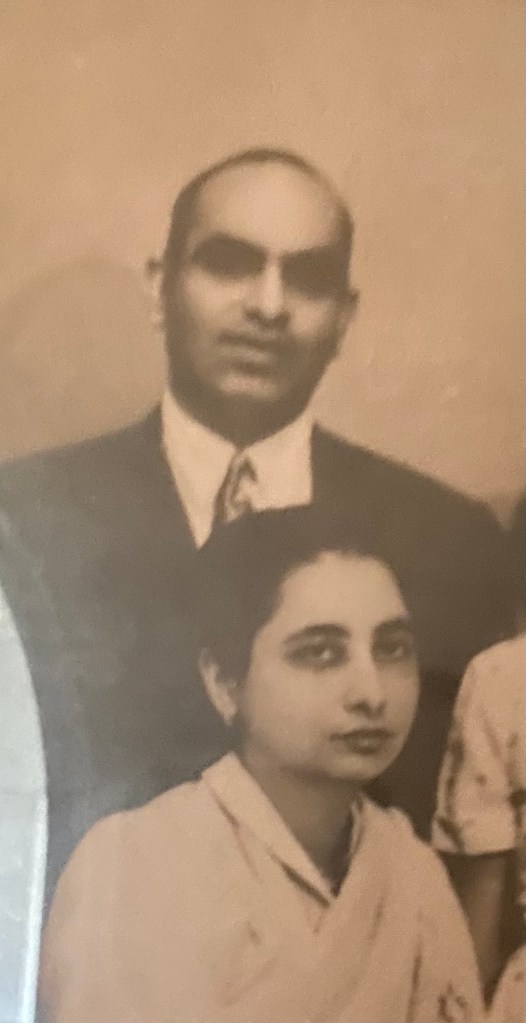
There have been many subjects I could have chosen to speak about, but the one that came up most often was about Pitru Paksha ( the current month devoted to remembering and honouring our ancestors…)
So I think I should begin with that question first, and then take up the other topics that you have suggested.
Let’s see where this conversation takes us.
More soon 🙏❤️
3
Viveeta says: Thank you Shakun . I’ve always wondered about the Shraad month .It seems to be a dying ritual. I don’t think our children/ grandchildren will carry it on . Even the parts seem to be a waning race . Do you think it’s an essential part of our religion?
I , Shakun say:
That is an interesting question. I don’t know that I would call Shraddha an “essential” part of religion in the sense that everyone must continue the ritual exactly as it has traditionally been done.
For me, the deeper question is what was the ritual trying to teach us? Shraddha is about remembering and honouring those who came before us, expressing gratitude, and acknowledging that our lives are connected to those who made our lives possible.
Perhaps the form of the ritual may change with time, and our children and grandchildren may not perform it exactly as we did. But if the spirit of remembrance, gratitude and respect remains, perhaps something very important has not been lost.
Also i honestly don’t know whether Shraddha is an essential part of our religion or whether, over time, the ritual may take different forms.
A Pandit or someone deeply learned in our scriptures may have a very different understanding of its purpose, and I would not want to dismiss that simply because it doesn’t fit with my own present understanding. There may well be something in the traditional practice that I don’t fully understand.
At the same time, I do feel that remembering our ancestors, expressing gratitude and acknowledging what we have received from those before us has a deep value in itself.
Perhaps the real question is: if the rituals change or disappear, are we also losing something deeper—or can the essence survive in another form?
I certainly don’t have the answer. Perhaps this is something worth exploring together. 🙏❤️
4
Deepika says :
The origin of our gotras are the seven rishis.This sharad also includes them.We belong to one of the gotras..which later became 49 and so on
Therefore this month is very auspicious to take blessings from our ancestors.
I , Shakun say:
There is a traditional connection between gotras and ancient rishis, and Pitru Paksha is specifically a period for honouring ancestors. But I am not sure about saying that all gotras originated from exactly seven rishis and later became 49, because the lists and traditions vary.
But I would definitely agree that Pitra Paksh is a meaningful and auspicious time to remember our ancestors and seek their blessings. Perhaps it also reminds us that we are part of a much larger lineage—we did not begin with ourselves, and what we are today has been shaped by those who came before us.
According to traditional Hindu belief, this is a period when the connection between the living and the ancestors is considered especially accessible or significant.
And maybe I can end with something very personal.
I lost my father when I was only four years old. Last night, quite unexpectedly, I dreamt of him. He was beside me, put his arm around me, and I held his hand.
I have no idea what dreams always mean, But the timing touched me deeply.
Perhaps Pitru Paksha is also a reminder that our relationship with those who have gone before us does not necessarily end with their physical departure. They remain in our memories, in the lives they shaped—and sometimes, maybe simply in a dream where the little girls as a grown up woman now, gets to hold her father’s hand again while his arm is around her.
5
Aasha says:
It’s not only in our Hindu scriptures that ancestors have been honoured. The Christians observe All Souls’ Day and pray for the departed. The Jews go on a certain day for a ceremony at the graveyard, collectively many gather together at the same time at the same grave. There is a significance to all this. Only we have to understand that superstition and belief are 2 different aspects. We have to choose which one we follow. It is said we must respect ancestors who cared for us and created this lineage for us… point is rememberance 🙏
I , Shakun believe:
Pitru Paksha isn’t simply a randomly chosen fortnight. Its timing is connected, in traditional Hindu cosmology, with the movements of the Sun and Moon.
And as I have said before,
“According to traditional Hindu belief, this is a period when the connection between the living and the ancestors is considered especially accessible or significant.”
And let me share a shortened version of a fwd ( with no author name) that I received:
So many things run in families …
A way of praying.
A recipe.
A phrase that suddenly makes us realise we sound just like someone who is no longer here.
But we inherit other things too…
Perhaps Pitru Paksha reminds us that we inherit not only names and traditions, but pieces of the people who came before us. Some become our strengths; some may become our struggles.
So we remember our Pitrs with gratitude and prayer. We honour what they gave us, while recognising that we don’t have to carry every burden forward.
And one day, we too will become someone’s ancestors.
So perhaps the question is not only, “What did our ancestors leave us?” but also:
“What are we leaving for the generations that come after us?”
May our Pitrs receive our remembrance and prayers, and may those who come after us inherit more blessings than burdens. 🙏❤️
6
Sapna shares the story of how shradha or pitra pakshya happened to come about …
Karna was a great warrior and a very generous man. After his death, he reached heaven but was given gold and jewels instead of food. He asked why, and was told that during his lifetime he had donated many things but had never offered food and water to his ancestors.
Karna prayed for a chance to correct this. He was allowed to return to Earth for 16 days and perform Shradh and offerings for his ancestors.
It is traditionally said that this is why Pitra Paksha is observed—to remember our ancestors and offer them food, water and prayers with love and gratitude. 🙏
I, Shakun say that maybe the deeper message is that generosity is not only about giving to those around us. Remembering and honouring those who came before us is also a meaningful expression of gratitude.
Pitru Paksha may also remind us that, while we are busy living our own lives, we remain part of a long chain of generations that came before us. As I have mentioned earlier, one day, we too will become someone’s ancestors.
My, Shakun’s take on above story :
If we look at the story literally, we may wonder: couldn’t gold simply be exchanged for food?
SoI believe that
Many ancient stories used simple, sometimes even dramatic, consequences to convey a deeper value. They may have used a little fear to make sure an important teaching was remembered.🙏🙏🙏
7
Lavina asks:
Why is Gothra so Important in most Prayers!
Answer:
In many traditional prayers and sankalpas, gotra is important because it identifies a person’s ancestral lineage, traditionally traced through the male line to an ancient rishi.
Traditionally, many gotras are associated with particular rishis for example, Kashyapa, Bharadwaja, Vashishtha, Gautama, Atri and others.
When you say your gotra during a ritual, you’re essentially saying: “I am this person, of this ancestral lineage, performing this act.”
This is particularly prominent in a sankalpa, where the priest identifies the person along with things such as name, lineage, place and the occasion. It makes the ritual specific rather than simply “a prayer for somebody.”
Gotra also historically had a social and marriage function. In many traditions, people belonging to the same gotra were regarded as sharing a common ancestral lineage and therefore marriage within the same gotra was avoided.
And here is the amusing bit: gotra isn’t the same thing as caste. Two people can belong to the same broad caste/community but have different gotras; conversely, gotra is primarily a lineage identifier.
But there is a deeper philosophical question hiding underneath it.
If you think in terms of Vedanta, the Atman doesn’t have a gotra at all. The Self is neither Brahmin nor Kshatriya, neither male nor female, neither Indian nor anything else. Gotra belongs to the individual’s embodied, social and ancestral identity, not to the ultimate Self.
8
Aasha says:
I really feel that any traditional belief should not be followed out of fear or superstition, but out of Faith in the scriptures. Just saw an episode of Ramayan where Rams mothers are talking about the souls of ancestors descending on Ayodhya to shower their Blessings on Ram on his return from the forest. So also, I believe that by remembering them and offering them something small even is honouring them from our hearts. 🙏 whether we feed a crow or cow or Pandit . Of course everyone has their own personal beliefs in this context. But I’ve seen my elders perform this ritual so I too follow, knowing that they have set this path for me to follow. 🙏🙏 Feeling Blessed 😇
9
Asha M says:
Yes Shakun !we have So many Beliefs ,after watching our Parents & In-laws Used to wonder “Arey “ how will they B satisfied ……But I obeyed Blindly And believe me later on I i realized They were actually right. ….. After all it is purely Remembrace Love 💕 Gratitude. Love & Now I genuinely look forward to their SHRAADH & we say “ Bhool Chook Maaf ! “ Please forgive our Mistakes . , knowingly & unknowingly .. Sacred time to Remember them. & Perhaps Prepare ther Favorite food too. At the same time Brahmins earn some income thru their Rituals , receive some grocery & other Offerings & I think this tradition brings love 💕 &. Respect together.
Mani says:
We have no idea where those who die go. Everything is an assumption from the writings in the scriptures to what your guru will explain. No one who has gone has returned to say authentically what is beyond once you die and drop this Physical body. Yet others have maintained that they live in parallel world depending on their karma and enjoy their
brief respite before returning in another body. We presume, and we assume. We live in faith and a belief in calculated from childhood but sometimes changed later on as per the gurus dictate. I don’t know am I rambling but one thing is that that there is confusion. Because if you question everything confusion is bound to happen. If there is blind belief then you believe. As in Islam you are not allowed to question. You have to believe.
I , Shakun replied to Mani:
As for me I have faith … but even if there is nothing after death what does it matter… my faith still makes me live my present with contentment 😊
Kabir says: main (God) …na mandir mein na masjid mein, main to hoon vishwaas mein 😊
And Mani replied to me:
That is so beautifully said . Faith is our ultimate power in everything we do and think.🙏
10
You may have heard the word ‘Tarpan’ in connection with Pitru Paksh or the Shraadh month.
“Tarpan is the offering of water made to our ancestors, with the intention of satisfying them and expressing our gratitude for the lineage from which we have received our life.”
“During Pitru Paksha, many people perform Tarpan for their ancestors.”
It is an offering made with the intention of satisfying, nourishing and honouring those to whom we owe something—Devas, Rishis and, especially during Pitru Paksha, our ancestors… 🙏
11
Sunita Moorjani shares what Dada Jashan of Sadhu Vaswani Mission said concerningShraadh:
A question was asked of Dada: “Few days ago my husband passed away. During his last days he expressed his desire to have water melon. But doctors refused to let him have it. He passed away after few days. Now if I feed any pandit or sadhu with water melon, will it reach my husband?”
Dada said that Shrad is the thread which connects us with our loved ones who have passed away. These physical things do not reach them, but our vibrations do. So we can do seva with love in their remembrance, as an offering to God. These vibrations reach them & help them in their cosmic journey.
12
Malu says:
Interesting views .
Last few years there’s been a lot of focus on ancestors in many avenues .
Im sure we have a strong bond with them.which we must honour in more ways than 1 .
I , Shakun say:
Thank you. I too feel that our bond with those who came before us is much stronger and deeper than we may sometimes realise.
Maybe that is what I have really understood while exploring Pitru Paksha with all of you. Whether we follow the rituals exactly as they have been followed for generations, or find our own way of remembering, the essence seems to be gratitude, remembrance and acknowledging that we did not begin with ourselves.
We carry something of our ancestors within us—their genes, their stories, their values, their strengths and sometimes even their unfinished burdens. We cannot change what came before us, but we can choose what we carry forward.
And one day, we too will become someone’s ancestors.
So the most meaningful Shraddha we can offer is not only to remember those who came before us, but to live our lives in such a way that those who come after us have something good to remember.
That, for me, is the deeper meaning of Pitru Paksha.
Thank you for travelling with me through all these questions. As always, I don’t claim to have all the answers. I have simply shared what I understand today—and maybe tomorrow, I will understand something a little differently.
And there is one more thought I would like to leave you with.
In a strange and rather beautiful way, during these days of our discussion, we have already remembered and honoured our ancestors. We have spoken about them, questioned our traditions, explored the meaning behind the rituals, shared our own memories and thought about the people whose lives made ours possible.
Maybe that too is a kind of Tarpan—not the traditional offering of water, but an offering of our time, attention, remembrance and gratitude.
Maybe our ancestors do not need us to remember them only during these sixteen days… what matters is that, somewhere in our lives, we acknowledge: I came from somewhere. I received something. And I am part of a much larger story.
And through our conversations, we have kept a little of that story alive.
And this also makes me look at rituals a little differently.
We sometimes wonder whether rituals are really necessary. But in a strange way, they are important because they give us a reason to remember those ancestors whom we may not think about during the rest of the year. The ritual stops us for a moment, makes us remember, offer, pray and express our gratitude.
And there is another thought I had mentioned earlier. According to traditional astrological belief, Pitru Paksha is a time when the connection between the living and those who have passed on is considered especially open or accessible—as though, for a while, a doorway between the two worlds becomes easier to approach.
Can we prove that such a doorway exists? I don’t know.
But we don’t always need proof to find meaning in a tradition.
If this period makes us pause and remember our ancestors with love and gratitude, then perhaps the ritual has already served a beautiful purpose.
😊❤️🙏