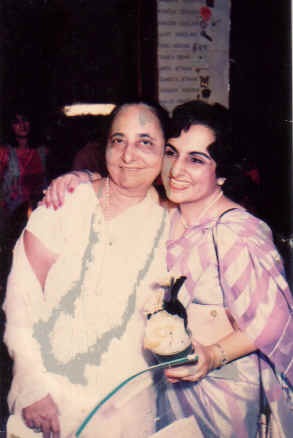
I have written something about what ‘beauty’ can be on my WhatsApp channel … called ‘Exploring Life with Shakun’
now I ask you , what does ‘beauty’ mean to you?
2
Mala says : this one needs thought.
Deepika says:
What a beautiful question.its made me so happy… I’m thinking only about this ever since I read it.
I find beauty in nature everywhere we are bestowed with only beauty n I’m ever so grateful.
You won’t believe this .
….I only meet wonderful people everyday.As I look for goodness n beauty around myself…
Beauty for me is outer n inner self.
One cannot go without the other.
Beauty is a voice of love a beautiful touch
An expression of the eyes.a beautiful look without words n the like
Beauty is being you, to the truest self…
Beauty is forgiveness…
The things you do for yourself n others selflessly.
Anything that makes you Happy is also a form of Beauty.
Therefore for me Beauty is all these little things I find within, n in others .
It’s the only anecdote to health in the mind body n soul.
Anita P says:
A beautiful face with glowing skin n sharp features is definitely attractive to the eyes but what stays longer with me is the gross n subtle (unspoken) connection .
The eyes that connects without speaking , the warmth in touch n kindness softness in gestures while interacting is beautiful for me .
It is beyond what my eyes admire n something that stays long after the moment has passed.
Nisha says:
Good Morning aunty
Beauty to me is not only about good looks,…it’s how you make the other person feel about themselves…for me beauty is only skin deep …real beauty is someone with a good heart & soul… it’s someone who has empathy & compassion & is kind & soft hearted …Real Beauty is when others say she is truly a beautiful person not what you think of yourself,in vain & pride 😉
I , Shakun say ( as I have shared in my WhatsApp channel) that also a pregnant woman is beautiful because of the life that she’s carrying, also, a not very ‘good looking man’
is handsome when he carries the responsibilities gently compassionately and calmly.
Now, if you see what I have posted on my channel about Sanskaras, tell me what is your take on it.
3
Abha says:
For me I feel just what Deepika has written.
Beauty is in everything, everywhere… One just has to feel it
This life is full of beauty✨Sapna D says:
Beauty to me is not only external it’s deep inside which reflects outside…
It is kindness, grace , ability to make others feel special.
It can be in little things a genuine smile, a loving heart n how we make others feel.
It reflects on a woman who has faced ups n down and still values warmth love n grace ..
they say beauty is in the eyes of beholder..
there is so much beauty around us only we have to be open to see ..
creator has created beauty every where… the nature its mesmerising!
Beauty in innocent children…
Beauty in being loved by family n friends
Beauty in our spiritual world !
I had read somewhere true meaning of BEAUTY
B— balance .. being at peace with yourself
E— elegance ..grace in the way u think n behave
A— authenticity .. being true to who you are
U— understanding ..compassion n empathy towards others
T— thoughtfulness ..caring through little gestures
Y— yourself ..having the confidence to be uniquely you …
Deepa T says:
Good morning Aunty… to me beauty is a person who has a kind heart, and is understanding with people around him/her… Kindness and Compassion are surely signs of beauty to me.
Nisha in reply to my note on my WhatsApp channel on Sanskar says :
So beautiful & true we are the imprints of what was taught to us in our childhood and these values & teachings cannot ever be erased ever …there is a saying God couldn’t come down personally that’s why he made mothers …the values teachings & upbringing remains for life…it’s like the finger we held while growing up, we never left ….
I , Shakun say:
Since most of you agree that true beauty lies in qualities such as compassion, kindness and understanding, shouldn’t we spend a little more time beautifying our inner selves — something that will never age?
I have absolutely nothing against looking beautiful on the outside too! 😊
But think of a couple who have lived together for over 50 years. At the end of all those years, what do you think matters more? How they look from the outside, or who they have become on the inside? What keeps them connected — their outward appearance or the beauty of their hearts?
Something to think about! ❤️
4
Shalini C says:
I agree with all these lovely ladies, a persons inner beauty and grace stays with you always,the positive aura a person emits always reaches you…looking groomed and good is also important but the inner grooming is lasting and what really counts…
Nisha says:
Definitely the beauty of their hearts …looks fade over a period of time but the heart will always stay eternal,so it’s a matter of becoming a better version of yourself everyday which will automatically reflect on your outer self too …you will look more at peace with yourself, be more authentic compassionate understanding & content …that’s why inner work is more important than beautifying yourself 😊
And about Sanskars , Nisha says :
So beautiful & true we are the imprints of what was taught to us in our childhood and these values & teachings cannot ever be erased ever …there is a saying God couldn’t come down personally that’s why he made mothers …the values teachings & upbringing remains for life…it’s like the finger we held while growing up,we never left ….
I, Shakun say:
The above os good and true about good sanskars ,
Yes, children absorb a great deal from their parents, not just through what they are taught, but through what they see and experience every day.
How about the bad or wrong tendencies?
For example, if a boy grows up watching his father abuse his mother, he may begin to believe that this is how a husband behaves. He may even associate aggression with authority or masculinity. In his mind, this behaviour becomes normal because it is what he has learnt at home.
But there is an important distinction:
What we inherit or learn as children may influence us, but it does not have to define us as adults.
We may absorb both good and bad tendencies through our upbringing. These become our conditioning. But as we grow older, we develop the ability to observe our own behaviour, question it and make different choices.
A man who abuses his wife cannot justify his behaviour by saying, “I saw my father do it.” His upbringing may help explain where the behaviour came from, but it does not excuse it.
Here is where we must exercise our free choice and take responsibility for our lives.
This is where self-awareness and viveka (discrimination between right and wrong) become important.
We cannot always choose the sanskaras we receive, but we can choose which ones we continue to nurture and which ones we consciously break.
And maybe this is one of the most important responsibilities of parenthood: not merely passing on our sanskaras, but making sure we don’t pass on our unhealed patterns.
A question worth asking is: Are we living according to values we have consciously chosen, or simply repeating wrong patterns we learnt without ever questioning them? 🙏❤️
5
Deepika says, As we discuss about sanskaars : People sometimes behave badly out of fear or insecurity.
For example, a husband who abuses his wife may be acting out of his own childhood trauma, inadequacies, financial worries or unmet expectations.
These may be the roots of behaviour, though these factors do not excuse abuse.
Our values are not always easy to practise because life circumstances, fears and insecurities can come in the way.
What I , Shakun think that she is saying is:
that values are important, but living by them is not always straightforward. Our circumstances can test them, confuse them or sometimes force us to compromise.
Deepika says:
values are influenced by circumstances. She lists fear, insecurity, competition, expectations, relationships and loneliness as factors that can affect how we behave.
Her personal conclusion is positive. She believes she has learnt and passed on certain non-negotiable values to her children.
I, Shakun, believe that we must take responsibility for our own actions rather than continue blaming our parents for the negative examples or sanskars they may have unknowingly passed on to us.
Many of us have been fortunate to grow up with good sanskars and positive examples. But we must also recognise that not everyone has had that privilege. Some may have unconsciously absorbed unhealthy habits, beliefs and behaviours during childhood.
Our upbringing influences us, but as adults, we have the ability to recognise these patterns, question them and change what we know is wrong.
Our parents may have shaped our beginnings, but they cannot be held responsible for every choice we make thereafter.
Ultimately, taking responsibility for ourselves is also part of growing spiritually and emotionally.